Nashata2
When Signals Compete: A Closer Look at Modern Wireless Interference Technologies
Every second, millions of devices exchange information through invisible radio waves. A smartphone uploads photos through a 5G network, a security camera streams video over WiFi, and a drone receives navigation commands from its operator. None of these connections exist in isolation. They all share limited spectrum resources, which is why signal interference remains an important subject in communication engineering.
Unlike wired networks, wireless systems cannot physically separate every transmission path. Multiple devices often operate within neighboring frequency bands, creating a constant challenge for engineers responsible for maintaining reliable performance. For this reason, spectrum analysis, interference monitoring, and signal optimization have become major areas of research across the telecommunications industry.
Discussions about advanced interference equipment frequently include the PJ-16 Multifunctional 16 Antennas hand-held 5G Jammer. Devices in this category attract attention because they demonstrate how multiple frequency bands can be addressed through a single platform. From a technical perspective, engineers often examine factors such as antenna arrangement, frequency coverage, thermal control systems, and overall hardware architecture.
Signal behavior becomes even more interesting when modern cellular technologies are involved. Fifth-generation mobile networks utilize sophisticated communication techniques designed to increase capacity and improve efficiency. These systems depend on accurate synchronization and stable signal reception. As a result, communication researchers often study how different types of interference affect network performance under controlled testing conditions.
The concept of signal jammers is also frequently discussed alongside spectrum management strategies. Every frequency allocation represents a valuable resource that must be shared among numerous services. Mobile communications, satellite navigation, wireless internet access, industrial automation systems, and public safety networks all depend on carefully coordinated spectrum usage. Understanding how interference occurs helps engineers design systems that remain stable under demanding conditions.
Video surveillance technology presents another interesting area of study. Wireless cameras are now widely used in homes, offices, warehouses, construction sites, and retail environments. Their popularity comes from flexible installation and simplified deployment compared with wired alternatives. At the same time, maintaining a reliable wireless connection remains a key design objective.
This is where discussions surrounding the Wifi jammer proof camera concept often emerge. Manufacturers continually seek ways to improve operational reliability when network conditions become unstable. Advanced solutions may incorporate intelligent channel switching, onboard storage systems, signal quality monitoring, or multiple communication options. Rather than depending entirely on a single wireless link, many modern surveillance products are designed with redundancy in mind. Engineers evaluating a Wifi jammer proof camera often focus on resilience rather than absolute immunity. In wireless communications, no system operates completely free from environmental influences. Instead, the goal is to improve performance under challenging conditions and minimize the impact of unexpected signal disruptions.
https://www.jammermfg.com/wifi-jammer.html
A similar principle applies to unmanned aerial systems. Commercial drones depend on continuous communication for flight control, telemetry exchange, navigation updates, and data transmission. Any interruption to these links can significantly affect operational effectiveness. Because of this dependency, communication security remains a major priority within the drone industry.
Technical discussions related to the PJ-032 High performance portable drone signal blocker frequently appear within broader research concerning drone communication architecture. Analysts may examine how unmanned systems react when signal quality changes, how autonomous functions behave during communication interruptions, and how navigation systems compensate for lost connectivity.
Modern drone platforms have evolved far beyond simple remote-controlled aircraft. Many incorporate encrypted communication channels, adaptive transmission protocols, multiple navigation sources, and intelligent fail-safe mechanisms. These features are intended to improve reliability across complex operating environments where signal conditions can vary significantly.
The role of signal jammers within academic and technical research is often connected to understanding these vulnerabilities. By studying interference scenarios, engineers gain valuable information about receiver sensitivity, spectrum efficiency, signal recovery mechanisms, and communication resilience. The resulting insights help manufacturers develop stronger products capable of operating in increasingly demanding radio environments.
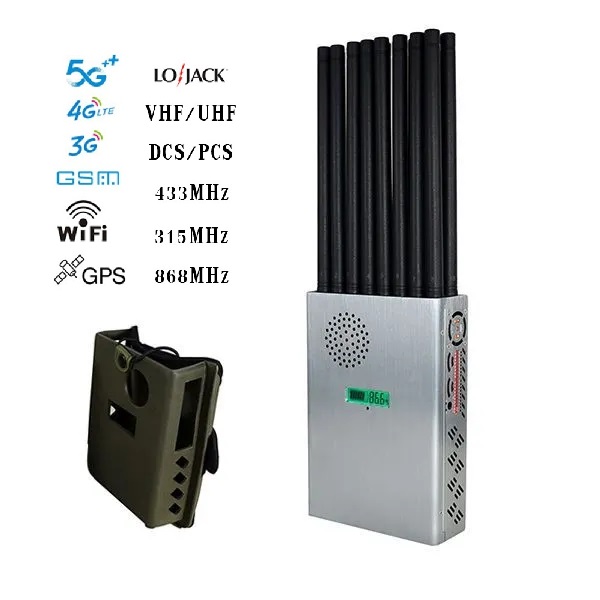
Interest in the PJ-16 Multifunctional 16 Antennas hand-held 5G Jammer also reflects the broader shift toward multi-band communication analysis. Modern wireless devices rarely depend on a single frequency range. Smartphones, for example, may simultaneously utilize cellular networks, WiFi connections, Bluetooth links, and satellite positioning services. This complexity creates new challenges for compatibility testing and spectrum coordination.
The Wifi jammer proof camera discussion highlights another trend within the security industry: the movement toward smarter and more autonomous devices. Cameras are no longer simple video recorders. Many now include edge processing capabilities, cloud integration, event detection algorithms, and intelligent data management features. Reliable connectivity remains important, but local processing power increasingly contributes to overall system resilience.
Meanwhile, research involving the PJ-032 High performance portable drone signal blocker often contributes to a deeper understanding of wireless control systems. Studies examining communication interruption scenarios can reveal weaknesses in protocol design, helping developers strengthen future generations of drone technology.
Radio spectrum remains one of the most valuable resources supporting modern communications. Every connected device competes for access to finite frequency space, making efficient spectrum utilization a continuing priority. Technologies evolve, network standards change, and device capabilities improve, yet the fundamental relationship between transmitter, receiver, and signal quality remains unchanged.
Factors That Influence Wireless Signal Stability
-
Frequency congestion within a specific area.
-
Physical obstacles such as buildings, walls, and terrain.
-
Distance between transmitting and receiving devices.
-
Environmental electromagnetic noise.
-
Hardware design and antenna efficiency.
-
Network traffic volume and spectrum utilization.
Understanding these factors provides useful context for discussions involving signal jammers, communication resilience, and spectrum management technologies.
Radio signals form the communication pathway behind smartphones, wireless cameras, drones, and countless connected devices. Topics related to signal jammers, the PJ-16 Multifunctional 16 Antennas hand-held 5G Jammer, Wifi jammer proof camera technologies, and the PJ-032 High performance portable drone signal blocker continue to appear in technical discussions because they highlight important aspects of signal behavior, interference analysis, and communication reliability. Examining how wireless systems respond to challenging radio conditions helps engineers improve network performance, strengthen device resilience, and support the ongoing development of advanced communication technologies.